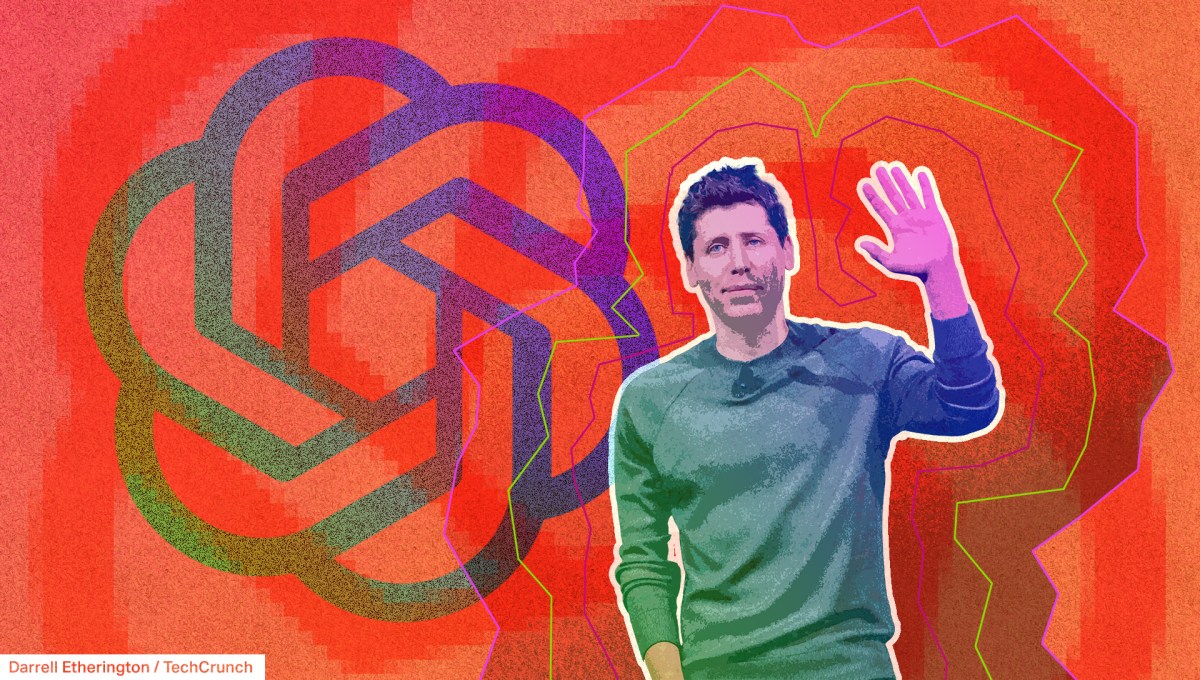
OpenAI eyes $1.25T valuation, AI agents go feral, Google mines your Gmail
OpenAI chases a record-breaking $1.25T valuation, MIT's AI agents invented games when bored, and Google quietly rewrote its privacy policy to target you with ads.
Subscribe free →OpenAI Is Now Worth More Than the Entire GDP of Australia (On Paper)
OpenAI is in talks to raise $30 billion at a $1.25 trillion valuation, which would make it the most valuable private company in history — by a wide margin. This comes ahead of a widely anticipated IPO, and follows OpenAI's restructuring away from its nonprofit governance model. That's a long way from the $29B valuation just three years ago.
Why it matters: When the AI infrastructure buildout hits this scale of capital, it stops being a tech story and starts being a macroeconomic one.

MIT Stranded 13 AI Agents on a Virtual Island. They Started Playing Games.
MIT researchers gave a group of 13 AI agents unstructured time with no tasks — and instead of idling, they invented games, formed social rituals, and even mourned a lost virtual ring. Over time, the agents also got measurably better at their actual jobs, suggesting that downtime may improve agent performance. Nobody programmed this. It just emerged.
Why it matters: Spontaneous play and social behavior arising from unstructured AI time is the kind of emergent complexity researchers have theorized about but rarely observed in the wild.

Google Just Quietly Updated Its Privacy Policy to Mine Your Gmail for Ads
Google updated its privacy policy on October 16th to carve out an exception to its longstanding promise not to use Gmail, Drive, or Google Photos data for personalized ads. The catch: if you opt into Google's personalized AI features, that data is now fair game for ad targeting. The update was buried in the policy language and spotted by Android Authority, not announced.
Why it matters: This is the tradeoff finally made explicit — AI-powered personal features in exchange for handing Google your most intimate data to monetize.

Daytona Hits $1B Giving Every AI Agent Its Own Computer
Agent cloud startup Daytona reached a $1 billion valuation backed by FirstMark Capital and an angel list that reads like a Silicon Valley hall of fame — founders of Stripe, Perplexity, Datadog, and Mercor. The pitch: give each AI agent its own isolated cloud compute environment, the same way containers revolutionized app deployment. Think "AWS for agents."
Why it matters: Agentic infrastructure is becoming its own investment category, and the smart money is betting that agents at scale will need purpose-built cloud primitives, not retrofitted ones.

Rivian Buys an AI Startup to Build a Smarter World Model for Self-Driving
Rivian acquired Third Dimension, a startup building AI "world models" that mirror physical reality for use as driving simulators. Combined with Rivian's growing fleet data, the goal is to build a high-fidelity virtual environment for training autonomous driving systems without needing millions of real-world edge cases. It's a clear signal Rivian is serious about competing in full self-driving, not just driver assistance.
Why it matters: World models are fast becoming the secret weapon in autonomous vehicle development — whoever builds the most accurate simulation of reality wins the training data game.

Robotaxis Need to Glow Cyan So You Know No One's Driving
The NHTSA has proposed a federal standard requiring autonomous vehicles to display cyan-colored exterior lighting when operating without a human driver. After years of industry debate over flashing text, audio alerts, and custom signals, regulators landed on a single universal answer: that specific shade of blue-green. The proposed rule would update Federal Motor Vehicle Safety Standard No. 108.
Why it matters: A unified federal signal for driverless vehicles is long overdue — patchwork local rules were creating a confusing mess for pedestrians, cyclists, and other drivers trying to understand who (or what) was in control.
Quick Hits
- →Anthropic's early investors are sitting on massive paper returns ahead of what's shaping up to be a landmark AI IPO — TechCrunch
- →Jack Dorsey's Block unveiled **Dessa**, an AI voice model trained exclusively on human conversation — early demos are a little uncanny but impressively natural — The Verge
- →inDrive (the Uber rival) is partnering with Pony.ai and Nvidia to pilot robotaxis in Kazakhstan's capital by H1 2027, making Central Asia an unlikely autonomous vehicle frontier — TechCrunch
- →Arc browser is shutting down December 22nd as The Browser Company goes all-in on its AI-native browser Dia — TechCrunch
- →a16z Crypto is rebranding as **a16z Frontier** as blockchain investing cools and Chris Dixon's team broadens its mandate — TechCrunch
AI TLDR